28 June, 2007

I am Inspired.


I ran across this on a wonderful little program called "Stumble Upon" which, if you're an internet junky or just love random cool stuff like me, is a God-send. Anyway, without further ado:


This I Believe
by Robert A. Heinlein

"I am not going to talk about religious beliefs but about matters so obvious that it has gone out of style to mention them. I believe in my neighbors. I know their faults, and I know that their virtues far outweigh their faults.
"Take Father Michael down our road a piece. I'm not of his creed, but I know that goodness and charity and lovingkindness shine in his daily actions. I believe in Father Mike. If I'm in trouble, I'll go to him."
"My next-door neighbor is a veterinary doctor. Doc will get out of bed after a hard day to help a stray cat. No fee--no prospect of a fee--I believe in Doc.
"I believe in my townspeople. You can knock on any door in our town saying, `I'm hungry,' and you will be fed. Our town is no exception. I've found the same ready charity everywhere. But for the one who says, `To heck with you--I got mine,' there are a hundred, a thousand who will say, `Sure, pal, sit down.'
"I know that despite all warnings against hitchhikers I can step up to the highway, thumb for a ride and in a few minutes a car or a truck will stop and someone will say, `Climb in Mac--how far you going?'
"I believe in my fellow citizens. Our headlines are splashed with crime yet for every criminal there are 10,000 honest, decent, kindly men. If it were not so, no child would live to grow up. Business could not go on from day to day. Decency is not news. It is buried in the obituaries, but is a force stronger than crime. I believe in the patient gallantry of nurses and the tedious sacrifices of teachers. I believe in the unseen and unending fight against desperate odds that goes on quietly in almost every home in the land.
"I believe in the honest craft of workmen. Take a look around you. There never were enough bosses to check up on all that work. From Independence Hall to the Grand Coulee Dam, these things were built level and square by craftsmen who were honest in their bones.
"I believe that almost all politicians are honest . . . there are hundreds of politicians, low paid or not paid at all, doing their level best without thanks or glory to make our system work. If this were not true we would never have gotten past the 13 colonies.
"I believe in Rodger Young. You and I are free today because of endless unnamed heroes from Valley Forge to the Yalu River. I believe in--I am proud to belong to--the United States. Despite shortcomings from lynchings to bad faith in high places, our nation has had the most decent and kindly internal practices and foreign policies to be found anywhere in history.
"And finally, I believe in my whole race. Yellow, white, black, red, brown. In the honesty, courage, intelligence, durability, and goodness of the overwhelming majority of my brothers and sisters everywhere on this planet. I am proud to be a human being. I believe that we have come this far by the skin of our teeth. That we always make it just by the skin of our teeth, but that we will always make it. Survive. Endure. I believe that this hairless embryo with the aching, oversize brain case and the opposable thumb, this animal barely up from the apes will endure. Will endure longer than his home planet -- will spread out to the stars and beyond, carrying with him his honesty and his insatiable curiosity, his unlimited courage and his noble essential decency.
"This I believe with all my heart."


This really inspired me because sometimes we can get caught up in religious or moral arguments that we tend to forget what really keeps humanity together - it is humanity itself! We were designed by our creator to love and serve one another, to be there for each other in times of need, to reach out to the sick and poor, to bind ourselves to the world through service and kindness. And yet, when we manipulate our minds with religion, reason, even education, suddenly we learn the concept of separateness. We are taught that there is such thing as a "sinner" and a "saint" when in our hearts we know that these terms mean nothing - we are all sinners, we are all saints, we are all heretics and prophets, because we are all a part of humanity.

When I read things like this, I can't help but feel like we have inherited a world that has lost its sense of humanity. We have been taught in classrooms that man is an animal, that physics guide our every move, and that morals is just a fancy word for ethics. But somewhere inside, doesn't something scream the truth? Doesn't sometimes inside still foster the notion that there is something more to life? That beyond the ecclesiastical arguments, the hateful bickering among denominations and faiths, past the divisions of belief or rationality, there is a very basic, core understanding of what we are?

In my short lifetime, I have seen genocide, religious wars, dirty politicians playing chess with young peoples' lives. I have seen blood, death, disease, greed, disgust, and racism. I have heard arguments praising hate and intolerance, I have been called a sinner and a disgrace, I have been made to feel like I am wrong in everything I believe. I have witnessed a world standing with its back turned to the dying, the hungry, and the merciless. But I have also witness miracles of faith, hope, charity, and love ... and these things burn most brightly in my memory because they are reminders of that spark inside the heart of us all ...

... they are reminders of our humanity.


19 June, 2007

Alternatives to the U.S. Dollar: It Can Be Done!

If you're familiar with my objections to the Federal Reserve, you'll know why this concept excites me. If not, it's still a cool idea. Puller from Reuters:

p.s. I certainly wouldn't waste my Berkshares on "past life regression therapy", but to each their own, right?

GREAT BARRINGTON, Massachusetts (Reuters) - A walk down Main Street in this New England town calls to mind the pictures of Norman Rockwell, who lived nearby and chronicled small-town American life in the mid-20th Century.

So it is fitting that the artist's face adorns the 50 BerkShares note, one of five denominations in a currency adopted by towns in western Massachusetts to support locally owned businesses over national chains.

"I just love the feel of using a local currency," said Trice Atchison, 43, a teacher who used BerkShares to buy a snack at a cafe in Great Barrington, a town of about 7,400 people. "It keeps the profit within the community."

There are about 844,000 BerkShares in circulation, worth $759,600 at the fixed exchange rate of 1 BerkShare to 90 U.S. cents, according to program organizers. The paper scrip is available in denominations of one, five, 10, 20 and 50.

In their 10 months of circulation, they've become a regular feature of the local economy. Businesses that accept BerkShares treat them interchangeably with dollars: a $1 cup of coffee sells for 1 BerkShare, a 10 percent discount for people paying in BerkShares.

Named for the local Berkshire Hills, BerkShares are accepted in about 280 cafes, coffee shops, grocery stores and other businesses in Great Barrington and neighboring towns, including Stockbridge, the town where Rockwell lived for a quarter century.

"BerkShares are cash, and so people have transferred their cash habits to BerkShares," said Susan Witt, executive director of the E.F. Schumacher Society, a nonprofit group that set up the program. "They might have 50 in their pocket, but not 150. They're buying their lunch, their coffee, a small birthday present."

Great Barrington attracts weekend residents and tourists from the New York area who help to support its wealth of organic farms, yoga studios, cafes and businesses like Allow Yourself to Be, which offers services ranging from massage to "chakra balancing" and Infinite Quest, which sells "past life regression therapy."

The BerkShares program is one of about a dozen such efforts in the nation. Local groups in California, Kansas, Michigan, New York, Oregon, Pennsylvania, Vermont and Wisconsin run similar ones. One of the oldest is Ithaca Hours, which went into circulation in 1991 in Ithaca, New York.

About $120,000 of that currency circulates in the rural town. Unlike BerkShares, Ithaca Hours cannot officially be freely converted to dollars, though some businesses buy them.

Stephen Burkle, president of the Ithaca Hours program, said the notes are a badge of local pride.

"At the beginning it was very hard to get small businesses to get on board with it," said Burkle, who also owns a music store in Ithaca. "When Ithaca Hours first started, there wasn't a Home Depot in town, there wasn't a Borders, there wasn't a Starbucks. Now that there are, it's a mechanism for small businesses to compete with national chains."

U.S. law prevents states from issuing their own currency but allows private groups to print paper scrip, though not coins, said Lewis Solomon, a professor of law at George Washington University, who studies local currencies.

"As long as you don't turn out quarters and you don't turn out something that looks like the U.S. dollar, it's legal," Solomon said.

FULL CIRCLE

The BerkShares experiment comes as the dollar is losing some of its status on international markets, with governments shifting some reserves into euros, the pound and other investments as the U.S. currency has slid in value.

But the dollar is still the currency that businesses in Great Barrington need to pay most of their bills.

"The promise of this program is for it to be a completed circle," said Matt Rubiner, owner of Rubiner's cheese shop and Rubi's cafe. Some local farmers who supply him accept BerkShares, but he pays most of his bills in dollars.

"The circle isn't quite completed yet in most cases, and someone has to take the hit," Rubiner said, referring to the 10 percent discount. "The person who takes the hit is the merchant, it's me."

Meanwhile, Berkshire Hills Bancorp Inc., a western Massachusetts bank that exchanges BerkShares for dollars, is considering BerkShares-denominated checks and debit cards.

"Businesses aren't comfortable walking around with wads of BerkShares to pay for their supplies or their advertising," said Melissa Joyce, a branch officer with the bank, which has 25 branches, six of which exchange BerkShares. "I do hope that we're able to develop the checking account and debit card, because it will make it easier for everyone."

14 June, 2007

The Reason of Faith, or, EAT IT, SAM HARRIS!

Not too long ago, there emerged a sect of the whole religious sha-bang which, in a previous blog I wrote, I called Evangelical Atheism. I've been thinking a lot about this concept lately, and feel the need to deposit a few thoughts on the matter. I should note here that I don't mean to further entrench the ongoing battle between religious and non-religious people, but all I can say is this: they fired the first shot. All will be explained.

I was surprised recently to learn that the Hebrew language, in which the Holy Bible was originally written in its scattered form, has no word for faith, unlike Greek, from which most modern Bibles are derived. The Greek faith is the one we're familiar with today - as the most cynical critics may put it, this faith is the belief in something that defies reason and which has no basis but in superstition. This particular faith is the one that the Evangelical Atheist Sam Harris was writing in his book The End of Faith and the "is anybody still paying attention to me?" paper-thin Letter to a Christian Nation. See, Sam Harris took the default "Science Guy" position of railing against faith based on his belief that science is the only way to know anything about the world - that if something can't be produced in a laboratory, it's superstition. So, in his logic (however full of holes it may be) something is not worth believing in unless it can be proven empirically (more on this later.)

Anyway, so the Hebrew language has no word for faith - and the closest terminology we have for the word we used in the Bible is actually faithfulness. It's funny how much difference a few letters make, isn't it? Suddenly, we have a great shift in vocabulary. We no longer have faith in God, we are faithful to Him. When you really study the difference here, it becomes terribly evident (however inconvenient to critics) that the Christian faith is not one of blind acceptance of superstition and assumed belief in God, but a penetrating belief in God and an assumed faithfulness to Him.

Evangelicals like Sam Harris like to toss around the "science" word as if it meant anything - but what does this word mean, this new holy process by which all things can be made known? Why do we treat it with such reverence? Why, when someone says "I believe in science" are we never allowed to criticize, to use our reason, to challenge such a view? I believe very strongly in science - that is, I know it exists. I have read many studies, reviewed many findings by great men of science. So, I know it exists, but how does one "believe in" it? The answer is so very linked to Christianity, it's making me giddy just thinking about it.

You see, it's terribly difficult to disprove that Jesus Christ existed - there are records as far back as 1 A.D. from historians, both Jewish and Roman, about this man who called himself the Christ. We can trace His footsteps, His homeland, we can see where He did the things the Bible says He did. The problem is that you can't prove the meaning of his life - that is, you know he was crucified by reading the writings of the Romans, but you can't know why He was killed. This is why we have our faithfulness in Him - to take Him at His word and remain faithful to His gift of Grace.

I'm afraid the same standard applies to science - we know, with a certain degree of certainty, that the word exists. We know the things it is made up of. We know that this world must have come from somewhere, by some process, and we must work backwards (when dealing with scientific inquiry) to determine how this came to be. So, science has developed a few theories (creation stories) by which to explain our world:

1) The Argument from Design: Science tells us of a time when there was no time, space, energy, or matter. When this was is irrelevant because there was no time to tell us what time it was or a calendar, since these are made of matter, which also didn't exist. Then, something happened - time started. Why time started or how it was kicked into being is irrelevant - all we know is that at some moment (the first moment, actually) everything came into being. However, everything didn't look like it did today - it was all chaos and jumbled together in one heap of everythingness and time-crunched. Then, time, space, energy, and matter exploded, sending the whole of existence flying into space - and someday, all of these things will return to a crumpled ball of everything. This totally explains things.

2) The Argument from Elegance: People like Richard Dawkins and Sam Harris will argue that Darwinism and the theories of natural evolution provide an elegant, simple explanation for why creation exists, and that if you view things from a totally Darwinist point of view, there is no need for a Creator. The funny thing is, if you view things from a Creation point of view, there's no need for a Darwin! Sometimes the door of logic swings both ways and hits you in the ass on the way out. The simple fact is that if all you have is a hammer, everything starts to look like nails - and if all you have is evolution, everything starts to look like apes.

3) The Argument from Argument: The last Canon of Atheism is a rational, ethical argument against Christianity because they believe that Christianity is ethically wrong, and that our God is a mean, vindictive God that likes to burn down cities, murder children, and punish lots of people for the first two people discovering what's between their legs. This is the most basic argument, which undoubtedly will include references to the Crusades, Inquisitions, and Third Day's music.

There are solid arguments against all of these Canon points, but I won't waste my time debating them right now - mostly because you, dear reader, are either on one side or the other. You are either a Christian, in which case this gave you a laugh, you are an Atheist, in which case you probably huffed and puffed your way through it and at one point actually pointed at the monitor and said, "that's totally wrong!", or you are an Agnostic, in which case you said "what does it matter?" then went off to smoke pot and murder babies. Just kidding.

The point is that what we are engaged in is not a battle of reason vs. faith - indeed, it is clear that reason and faith (fullness) are both parts of the Christian world-view and one without the other is useless and pointless. The Christian faith is a deep, full experience which requires critical thinking, reason, logic, and ethics, but also requires that we remain faithful to God in all things. Now, insert the word "atheistic" and "science" where I have used "Christian" and "God" and you will see my point: Sam Harris is not the voice of reason calling people to the truth of Atheism, he is an apologist for his religion who knows very little about that which he is fighting against.

13 June, 2007

Discourse on a Zombie: Why I Love Zombie Movies

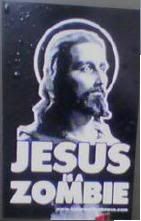
Here's something you may not know about me: I love Zombie movies. Oh, and if you'll notice that I've capitalized the "Z", and that's simply out of respect. It's not a proper noun or anything, but I add the capitalization in such a way as I would if I were talking about Jesus - ie, to capitalize the "H" in "Him" when referring to Christ. That's not to equate Jesus with beings who rise from the dead or anything, but ... wow ... oh wait ... I am certainly onto something here. Jesus rose from the dead 2,000 years ago, long before the venerable George A. Romero brought us the concept of Zombism ... ergo, I say Jesus was the first Zombie! Call me a blasphemer, but you can't deny the truth of things. Sure, Christ never ate brains (unless there's a similarity between "bread" and "brains" in Hebrew that I'm unaware of), but brain-eating does not a zombie make!

Anyway, I do, indeed, love Zombie movies. Why? Jeez, why not?

Zombie movies, like many other horror movies provide a glimpse into the zeitgeist (that's for you, Chris) into the age in which they were made. For example, let's examine the classic Dawn of the Dead, which was great for a few reasons. Firstly, it was one of the first times the term "Zombie" actually appears in a Zombie flick - in fact, "Dawn of the Dead" was actually a subtitle for the film, which was really titled, simply, Zombie. In this little cult gem, a group of police and military personnel are seen struggling with the systematic destruction of people ... err, Zombies ... err ... Oh God, are they people or not!? What has come of the world?!!! This is the central concept behind the first half of the film - the political struggle between maintaining order and control while preserving human dignity and respect for your fellow man.

And so goes the central theme of so many Zombie movies, including the little-seen and grossly under-rated Romero vehicle Land of the Dead, which was released not too long ago and failed to be accepted by the common people as part of the Zombie Canon. And why the hell not? Was it John Leguizamo's weak portrayal of a military zealot, or was it the absurd inclusion of Dennis Hopper as the cliche "Old Rich Bastard" character? I'm sorry, but Zombie films thrive on cliches, my friends. In fact, as long as the genre's been around, it's been essentially self-satirical! In Land of the Dead, we watch the horrified reactions of one afro-Zombie as he watches his Zombie brotha's cut down by a bunch of white (and one Mexican) military bastards, so they rebel against the system by breaking into the mall-like human haven and eating everyone. Why's the white man always keepin' the Zombie brotha down? Hell naw!

Back in 1968, Romero produced the first bona-fide Zombie movie, called Night of the Living Dead, which was actually utterly horrifying and stands as one of the greatest horror movies of all time. But after that, most Zombie flicks were aimed at skewering the very genre they belonged to!

For example, the 1985 Dan O'Bannon movie, Return of the Living Dead (not to be confused with the sub-par Return of the Living Dead II, III, and IV) may as well have been a direct sequel to the Romero genre (the title is one of many resemblances between the two movies) and was a side-splitting comedy! Who can forget the Zombie hordes talking into the CB radio, "Send ... more ... paramedics!" Or "Scream Queen" Linnea Quigley's "Graveyard Dance" and prophetic sexual fantasy of being torn apart naked (later on in the film, she torn apart while naked!)

Oh, wait, what was I talking about? Something about the memory of Quigley's cod-piece-wearing hip-thrusting dance gets me off track time after time. Oh, right, the Zeitgeist. I'm capitalizing all of my Z's. Again, it's all about respect.

Fast-forward to today - probably one of the best Zombie movies of all time (I don't care what you say) was the 2004 remake of the Romero film Dawn of the Dead (they dropped the Zombie part this time, probably out of respect for the tradition of not actually using the term "Zombie" in a Zombie movie. "Don't say that!" "What" "That word!" "Why" "I don't know ... just don't!") In which the socio-political message is deepened with a Lord of the Flies-esque scenario in which different classes of people come together, establish a social order, overthrow said social order, and establish a Marxian society of equality until those damn Yankees ... er ... Zombies break in and ruin everything (ever wonder why the Zombies were drawn to the Mall in the first place? Yep, the evils of capitalism! Long live the motherland!"

So let me sum things up here: Zombie Movies are to themselves as Manowar is to heavy metal - they are, in themselves wonderful, but as a practice of self-mockery, they're even better. Zombie movies reflect a part of ourselves, our society, and our sense of self-absurdity. In watching a Zombie movie, we are forced to view our society from the outside-in, because obviously once we start returning from the dead, all sense of social order just collapses, and what good is a system that can't stand up under the rising of the dead into cannibalistic animals? And finally, the Zombie genre is a message from God demanding that we accept Christ ... or he'll chew our brains and spit them out.*

I'm going to Mass now. I'm in need of some serious absolution.

* I should mention here that I believe God has a sense of humor, and so should we. And if He doesn't ... I'm screwed.

05 June, 2007

In the Age of Terror: Finding a Definition in a World that is Starving of Definition

I recently acquired the new Megadeth CD, "United Abominations" from a call-in contest on a local heavy metal radio station. I've never been a big Megadeth fan, but in thumbing through the pages of the booklet, I came to a startling revelation: Art is imitating Life, and Art is becoming Destructive. In the record, Megadeth explores the nuances of our post-9/11 world, and their conclusions are terrifying: The world has entered what they call the "end game" and it's time to start fighting for "our side" to win.

My God, could this be true? Maybe. The evidence is everywhere. The most glaring evidence is in the growing battle between religions - atheists are battling Christians (and, it seems, only Christians), Christians are battling non-Christians, Muslims are battling non-Muslims, and Jews are battling ... every country on every side of theirs. It seems we live in a world that is constantly at war. Alliances are made and broken, unions forged and destroyed, and we are slowly moving toward an age of worldwide totalitarianism, universal corporatism, and religious relativism on a never-before-seen scale.

What does this mean? It means that what we believe is becoming more important, not less, in a time when our beliefs are starting to create wars and violence. In the modern world, there is a cry for the end of definition, which some believe is the key to attaining peace - if we have nothing to believe in, then there is nothing to kill each other over! This is a dangerous path to tread, but let's explore it.

Atheism's modern goal is to secularize the world - to believe in nothing but what science can know for sure (and what is that, exactly?) Islam's modern goal is to rule by the sword (or, by the IED.) What's the difference? The main difference here is in the way that different religions go about spreading their world-view, and I fail to see a difference between many of these tactics. Each has the goal of homogenizing everyone to their specific Dogma, either by humiliation, cohesion, or, most rarely, reason.

It is, I'm sad to say, a hard time to be a Christian. It seems that we have inherited a world where the default position is that all religions (but mainly Christianity, right?) are based on superstition, fear, and fairy-tale beliefs. And the hardest part is there is no arguing this point, because since it is based on nothing more than caricaturization and half-truths, the only way to argue against it is with the same tactics, in which case we are labeled as hateful. If we counter with reason, we are being apologists. If we counter with compassion, we're being bleeding-hearts. If we counter with our own experience or wisdom from the bible, we are being weak-minded, brain-washed victims of religion.

So the time has come to ask of the world: What do you want from us? Christians live, many of us, with our backs in the corner. No argument is valid, no excuse good enough for the rising Atheist agenda against our beliefs - it seems that Atheism has become just another religion bent on acquiring more members. Uh, oh ... I may have stumbled onto something here. Atheism, that ultra-secular, cynical world-view has become a full-fledged religion, complete with Dogmas, coercion tactics, and an intolerance for any world-view that isn't theirs.

But we can't judge too harshly, can we? What evils have been done in the name of God before? C.S. Lewis once wrote, "Of all bad men religious bad men are the worst", and gosh, isn't he right? They love to remind us of the Inquisition with all its evils, the Crusades, the countless acts of pure evil done under the counterfeit banner of heaven ... but what of the good things to come of the Christian religion? They don't like to talk about those, and if they do, the argument comes out something like this: "Yes, but the people who did good things have little to do with their religion, and more to do with them being good people anyway." And yet, the evil things men do are because of their religion? That's a terrible double-standard!

So I ask, then, what is the alternative to a religion? Secularism, the absence of guidance by a moral law (unless you choose ethics, which serves no master but whoever has the sharpest wit ... a dangerous proposition!), and hedonism, to which C.S. Lewis responds: "We have had enough, once and for all, of Hedonism--the gloomy philosophy which says that Pleasure is the only good." Isn't this what we're asked to accept from the Atheism alternative - that the only good (not, as Christ said, "none but God is good") is what our instincts lead us to do? And what will that yield - a life led for self-gratification, in giving ourselves over to our animal nature?

Maybe Huxley was onto something when he made the case for Atheism. Aldous Huxley said, to summarize, "I want this world to be natural, because that frees me to explore my erotic desires". Typical, coming from a man who once said, "Maybe this world is another planet's hell." If you examine the Atheist Dogma, you will eventually come to the conclusion that life is both based on pleasure-appeasement, miserable, and inherently meaninglessness. This is the basis of the religion, no matter whose perspective you use - the biological Atheist Richard Dawkins once said, "Faith is the great cop-out, the great excuse to evade the need to think and evaluate evidence. Faith is belief in spite of, even perhaps because of, the lack of evidence."

Ouch. And we are the hateful ones? The truth is, you can't argue the "science" question when it comes to Religion vs. Atheism - what science would you use? Biological science? Physics? Quantum Theory? Which perspective would you use? Which age of science? Science, like secularism and pure reason, serves whichever master makes the most compelling argument, so if we use that paradigm, our parameters will constantly be changing with the latest Dogma-shift. It used to be Relativity, but now it's Strings! Burn the Relativist!

You understand my point, I have to assume. Science has entered that realm of a religion as it begins to splinter and refocus its Dogmas, to the point where contesting viewpoints and alternative conclusions are no longer acceptable and must be squashed. Science is undergoing its own (less violent) inquisition - but no longer are witches burned or heretics drawn and quartered. No, in the new inquisition, competing view-points are humiliated to death, stripped of their right to express, and left to rot in the discard pile of the Scientific Majority.

Now, more than ever, I find it important to understand not only what I believe, but that I have a belief. The world demands that I believe in nothing, and it is becoming more and more difficult to resist. I am told that I'm a "bad Christian" because, from time to time, I fall short of perfection (duh) and don't live the image of a "good Christian". But, as the great Ravi Zacharias once said, "Jesus didn't come to make bad men good, he came to make dead men live." This is the heart of my religion, and it is the most important to me - any regular study of the Christian religion will render the understanding that it is not in existence to perfect people (at least not in this life) but to enable them to be forgiven for not being perfect. What, then, can Atheism offer in contrast to that? While Christianity recognizes sin and imperfection, it allows for a way out, a plan for redemption. Atheism, on the other hand, removes sin by giving it a glossy goat of paint and calling it "nature" - it gives up the search for a cure for the disease and called the disease "health".

So, perhaps Megadeth is right - the world is changing. Battle-lines are being formed. I have chosen which side I will remain on, and I believe it's the right one. And if I'm wrong? Who cares ... we're all dead men in the end. Unless I'm right, in which case only some of us are dead men.